 Image 1 of 5
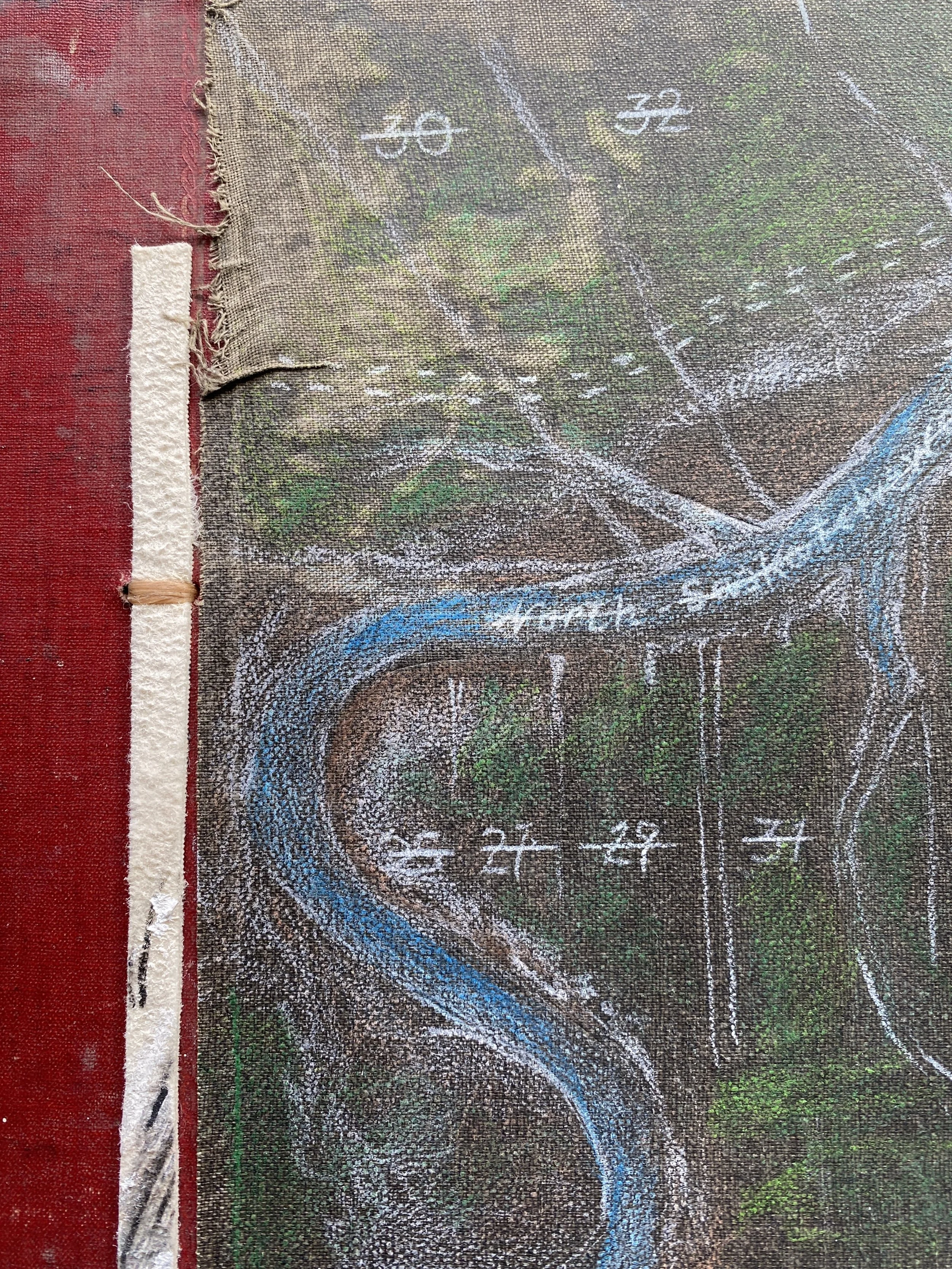 Image 2 of 5
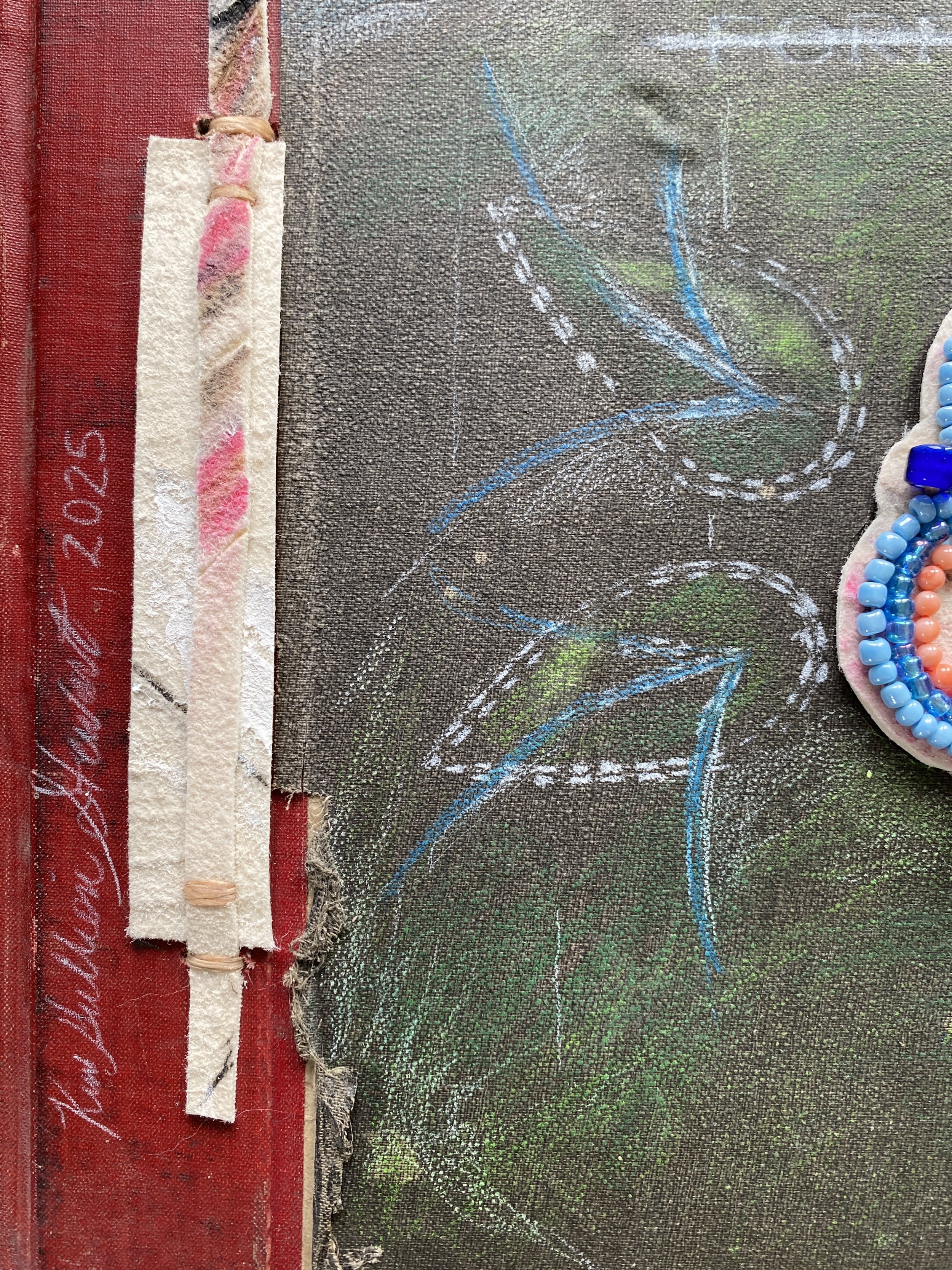 Image 3 of 5
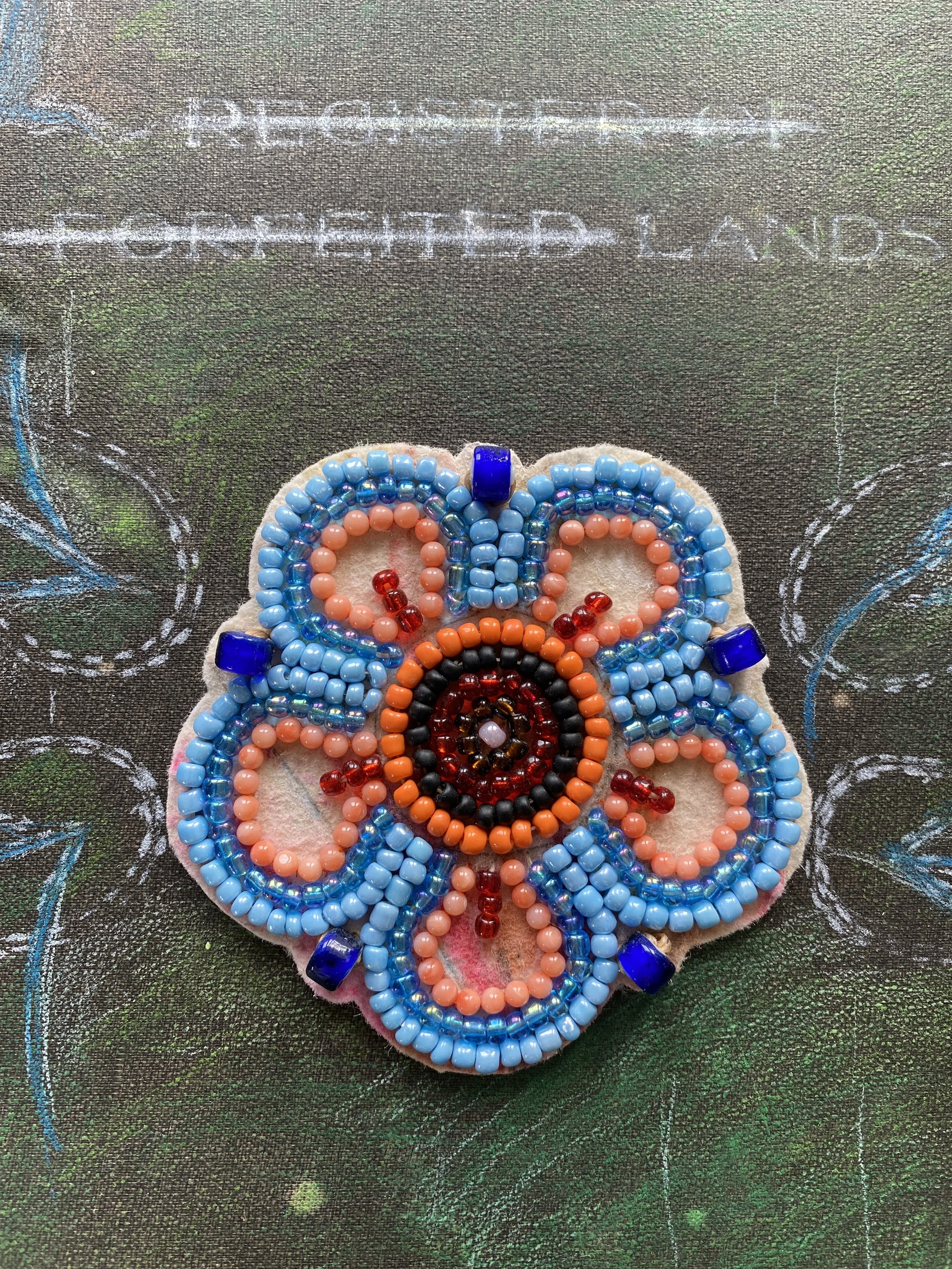 Image 4 of 5
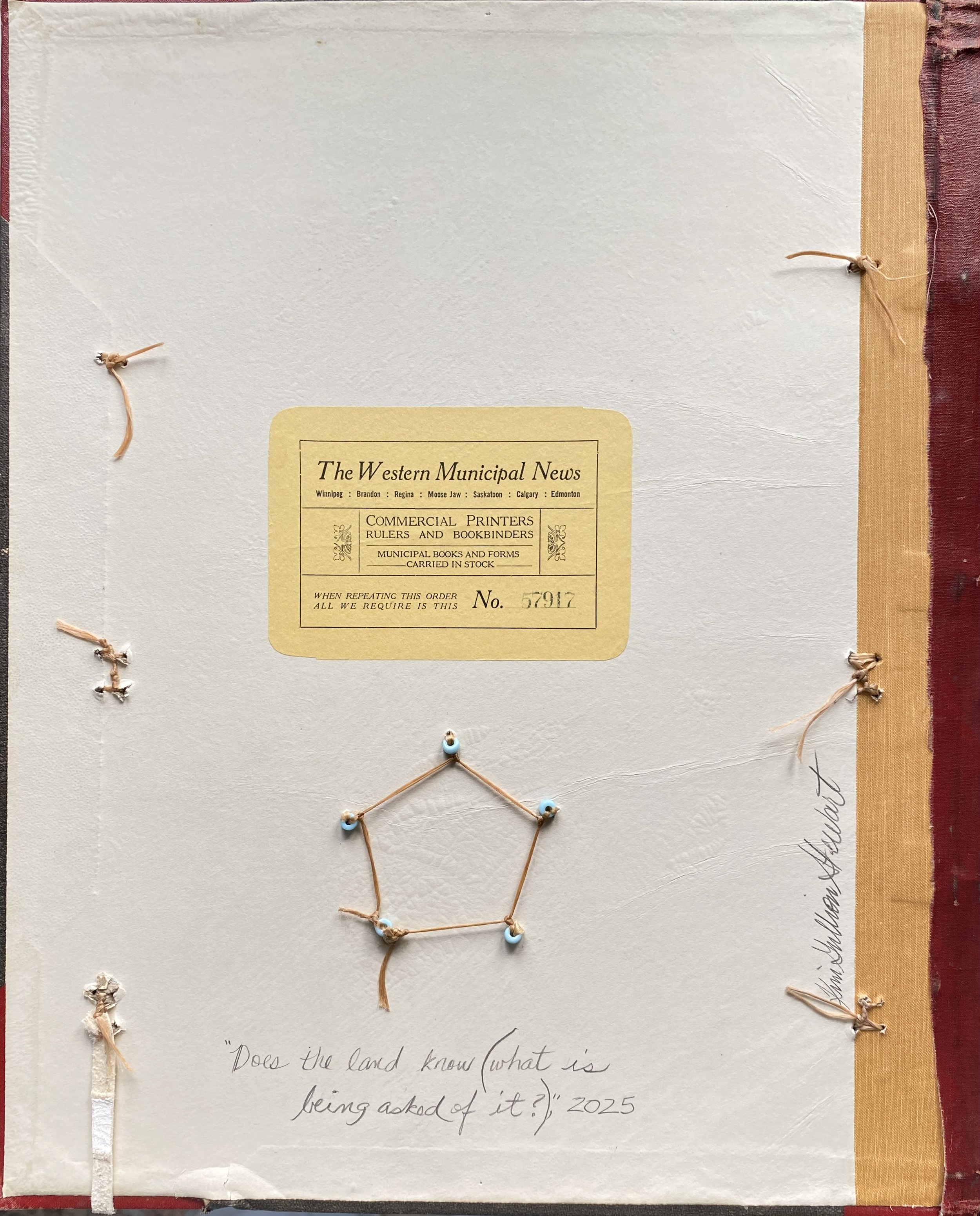 Image 5 of 5
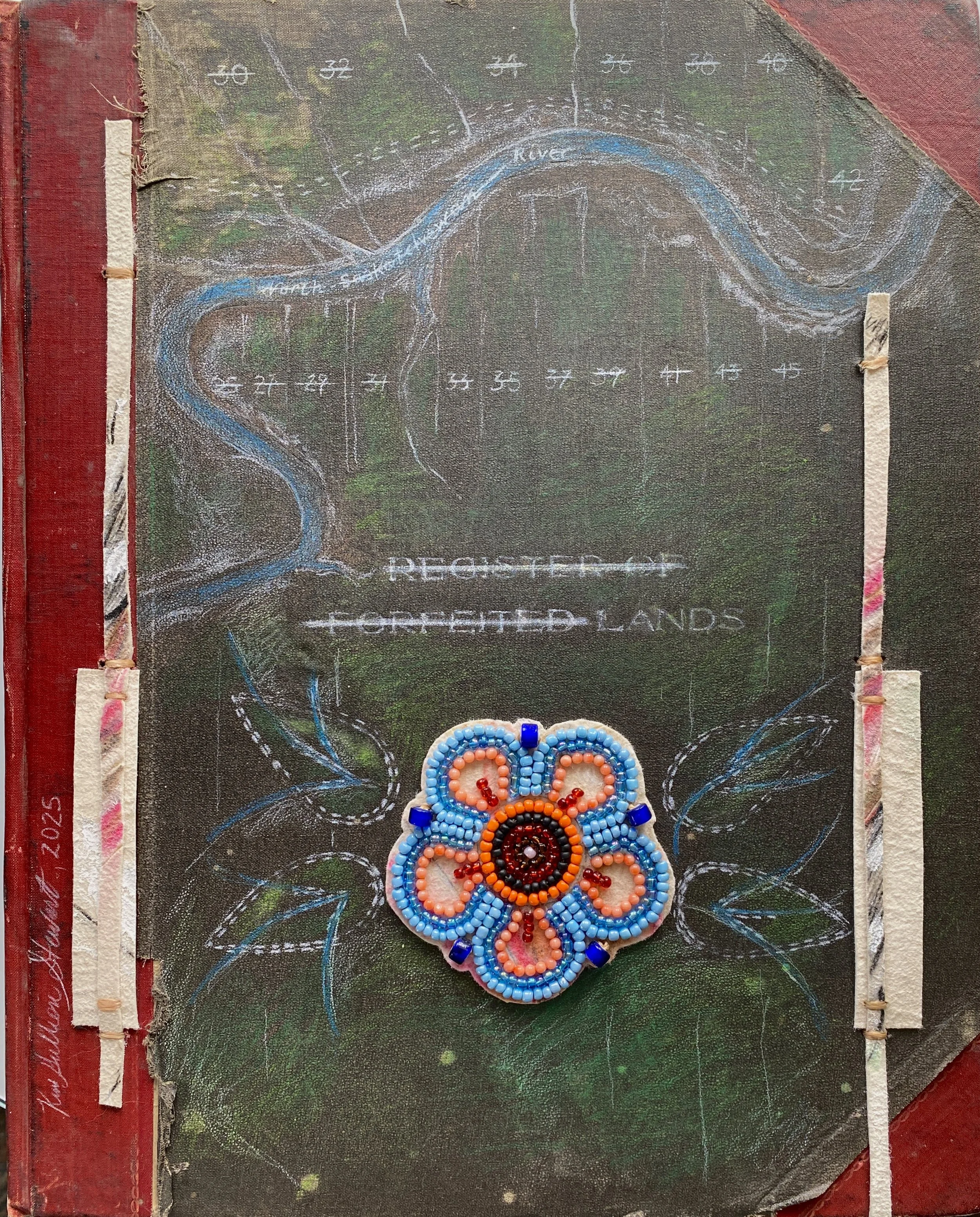
As I wrestle with quantum physics theories around vibration, observation and intention, it makes me wonder how human political activities affect the land.
Beaded and drawn on a 1950’s ledger cover, this piece asks questions about stewardship, about ownership, about claims people make when labeling, recording words on paper, or speaking about the land. In which way (if any) does the land know what is being asked of it?
The map at the top of the piece is my representation of Edmonton Settlement map of 1882 that shows plots along the North Saskatchewan River in Edmonton, Alberta. My Gr. x2 Grandfather, George Gullion and his brother James Ingram Gullion held two plots (34, and 32) at the top.
(Pencil crayon, deer hide, acrylic paint, ‘E’ beads and crow beads on a 14 × 17 “ vintage 1950’s ledger cover)

